
Photographer of the week: Meet wildlife photographer and guide Lauren Dent

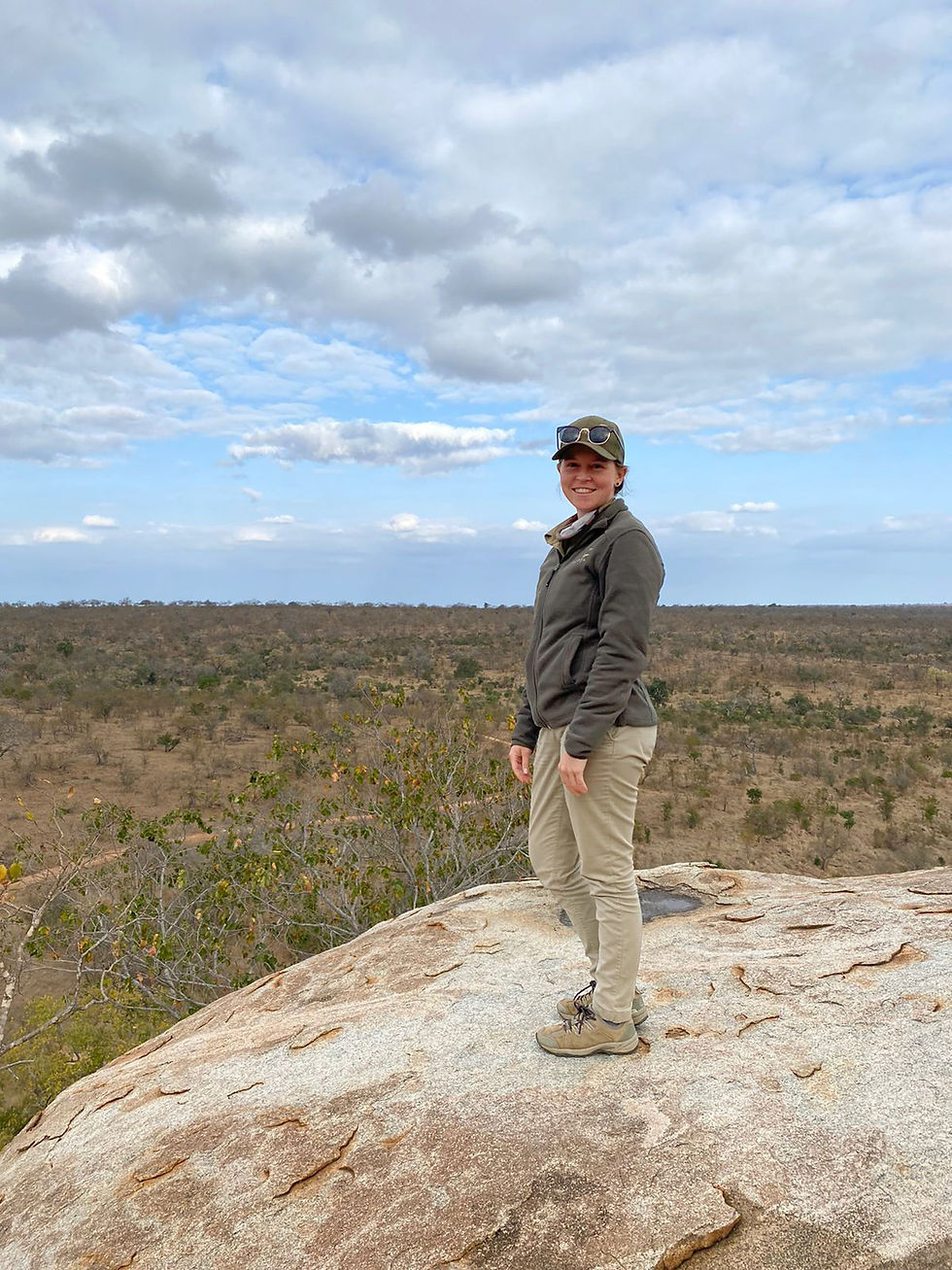
For this week's Photographer of the Week, we're introducing you to Lauren Dent, a wildlife photographer and field guide who has spent the past nine years living and working in the South African bush.
Lauren grew up in Johannesburg but today calls the Lowveld home. She lives on Pidwa Wilderness Reserve, where she works as a volunteer coordinator and guide for Askari Wilderness Conservation Programme. Her journey into wildlife photography is closely connected to the career she chose and a fascination with the natural world that started long before she ever owned a camera.
For Lauren, photographs have become much more than records of the animals and birds she encounters. Each image is connected to a place, an experience, something she has learned, and often the people she shared that experience with.
Where It All Began
Lauren's love for wildlife started at a very young age. Although both her parents worked in the corporate world in Johannesburg, they regularly escaped the city to spend time in nature. Lauren and her sister grew up exploring the Drakensberg and camping in the bush, but a particularly important chapter began when the girls were around ten years old and their parents decided they were finally old enough to properly experience the Kruger National Park.
Those family trips brought together several influences that would eventually shape Lauren's future. Her father loved photography, while her mother had inherited a passion for keeping wildlife lists from Lauren's English grandparents.
Lauren vividly remembers ticking animals off in the Kruger National Park map book with her sister, asking her father to photograph everything they encountered, and then returning to camp to identify their sightings using field guides with their mother.
As the family continued exploring southern Africa together, Lauren's fascination with nature only grew. She gradually became the family's resident nature expert, armed with a "Did you know?" fact for almost every natural phenomenon they encountered. The work of people such as David Attenborough and Jane Goodall provided further inspiration, and eventually Lauren decided that her lifelong fascination with wildlife was something she wanted to turn into a career.
Turning a Childhood Passion Into a Career
Lauren completed a BSc in Zoology at the University of Pretoria before completing her basic Field Guiding course with Lee Gutteridge at Nature Guide Training.
From there, she entered the guiding industry as what she describes as a "very passionate, very green Field Guide." Her career would eventually take her from reserves in Namibia to the North West Province and finally into the Lowveld.
When she graduated from university, her parents gave her two gifts that would become important companions during those early years: a copy of Roberts Bird Guide 2nd Edition and a Canon SX620 HS point and shoot camera.
Lauren loved that little Canon.
"It was small, simple to use and had one heck of a digital zoom!"
The camera went everywhere with her. It joined her on game drives with guests, walks in the mountains, and almost every other opportunity she had to explore nature. But photography also became an important part of the way Lauren learned.
"If I didn't know what something was, I would snap a photo of it and spend hours poring over reference books, one of my other loves, learning new information that not only made me better at my job but fuelled my ever growing fascination with the natural world."
Photography wasn't simply documenting what she encountered. It was helping her become a better naturalist and guide.

The Camera That Changed Her Journey
Lauren began taking photography much more seriously after moving to the Lowveld and working at Mala Mala Game Reserve.
With its exceptional wildlife and landscapes, Mala Mala also brought Lauren into contact with professional wildlife photographers, both among her colleagues and the guests she guided.
While she was still training as a Mala Mala ranger, Lauren joined another guide and his guests during a 12 night stay. The guests were passionate about big cats and photography and had brought two cameras with them.
The group experienced some remarkable sightings during their stay, including watching a leopard kill an impala in the Sand River before leading her young daughter back to the kill.
Then came an unexpected moment at the end of the trip.
As the guests prepared to leave, they called Lauren over to say goodbye and handed her their second camera: a Canon EOS 70D with a 16 to 300mm lens.
"I was obviously shocked and emotional! This was too much, but they insisted I keep it and enjoy my photographic journey."
It was an enormous upgrade from her little point and shoot Canon and became the camera Lauren used extensively for the following two years. She learned about different photographic techniques and began developing a much deeper understanding of the craft.
Later, she inherited her father's Nikon D7000 and 150 to 500mm lens. Changing camera brands meant, in Lauren's words, that it felt as though she had to learn everything again, but the longer lens also helped her begin refining her bird photography in particular.
Keeping Photography Simple
Despite the equipment changes and years of experience that followed, Lauren describes her photographic style as simple and understated.
"I've never been particularly artistic in any way but somehow, I've managed to point the camera in the right direction, created a decent composition and sometimes even get my settings right for the perfect shot."
She is equally relaxed when it comes to editing. Sifting through hundreds of photographs isn't her favourite part of photography, and she generally prefers to keep post processing to a minimum.
Her aim is to keep an image as close as possible to what nature presented when she pressed the shutter.
That approach fits naturally with what photography means to Lauren. The image matters, but the experience behind it matters even more.
The Challenge of Photographing Birds
It is the challenge that makes bird photography particularly enjoyable for Lauren.
Birds are small. They move constantly. They disappear into vegetation. Sometimes they call repeatedly from somewhere above you while stubbornly refusing to reveal themselves.
And then, finally, everything comes together.
"When you do manage to capture them, it is a moment of both excitement and bliss."
Lauren has found a particularly entertaining way of explaining birding to people who don't understand the obsession.
"I always tell non birders that it is a little like Pokémon, but in real life! Adding a new bird to your list is great but having proof of the sighting tastes that little bit sweeter."
Beyond the challenge, she is fascinated by the sheer diversity of birds. Their colours, shapes, calls and behaviour provide an almost endless supply of photographic subjects.

Patience, and Knowing When to Put the Camera Down
Bird photography has taught Lauren the importance of patience.
"Birds don't like chaos. Sit still and wait. Nine times out of ten, they will reward you with a beautiful sighting."
But there is another lesson she considers equally important, and it is something she regularly teaches the guests and volunteers she works with.
Know when to put the camera down.
"Getting the shot is great, but missing the whole experience because you've only looked at it through the viewfinder is a greater loss than you know."
For someone whose career and photography revolve around wildlife, the photograph is never supposed to become more important than the encounter itself.
One Narina Trogon and One Perfect Frame
One photograph Lauren is particularly proud of came from the afromontane forests of Magoebaskloof.
Lauren and a friend were staying in a wooden cabin and enjoying their morning tea on the deck when they heard the unmistakable hoarse call of a male Narina Trogon. Better still, the bird sounded close.
They eventually spotted him in the canopy, almost at eye level.
Lauren headed inside to grab her camera and, in her own words, "inelegantly tip toed" into position before hanging about half of her body out of an open window to find the right angle.
Naturally, this was also the exact moment her camera decided not to cooperate.
"At that exact moment, my camera decided to have a wobbly and would not auto focus despite my curses."
With autofocus refusing to work, Lauren switched to manual focus and managed to fire off several photographs before the trogon disappeared.
The first few were painfully close, but slightly blurry.
She continued scrolling through the images until she found it.
One photograph.
Perfectly focused.
"It was amazing. He was sitting facing us, showing off his beautiful colours in a patch of sunlight that managed to break through the thick canopy of the forest. He was even looking at us with what almost looked like a smug glint in his eye saying, 'You're welcome.'"
Of all the images she could have chosen, there is something fitting about this one being particularly special. It contains the challenge, frustration, excitement and eventual reward that Lauren enjoys so much about bird photography.

Every Photograph Hides a Story
While selecting photographs for this feature, Lauren noticed something about the images she considers her favourites.
"When looking for photos for this article I was reminded how each of my favourite images, apart from being nice to look at, reminded me of the experience behind the photo."
Every image takes her back to a particular adventure, place or person.
"Every single one hides a story, bringing up wonderful memories of adventures with people that I love."
In many ways, that explains Lauren's relationship with photography better than any discussion about equipment or technique could. The photographs allow her to preserve the experiences that have shaped her life in the bush and revisit them years later.
Don't Ask Her to Choose a Favourite Bird
Some photographers immediately know their favourite bird. Lauren isn't one of them.
"I do not have a favourite bird species. I genuinely love them all!"
And when she says all, she means it.
From pigeons on city streets to vultures gathering around a carcass and brilliantly coloured sunbirds, Lauren finds something fascinating in all of them.
"I love their diversity in every aspect of life: size, colour, shape, call, habitat, diet, nest constructions, breeding behaviour. It is just mind blowing!"
That fascination with diversity has remained central to her life as both a guide and photographer.

Three Hours Surrounded by Vultures
Choosing one memorable wildlife experience is equally difficult for someone who has spent nine years living and working in the bush.
Lifers are always memorable, but Lauren is just as interested in interactions between species. One extraordinary encounter involving cheetahs and vultures stands out.
Lauren was fortunate enough to watch a female cheetah and her subadult hunt a nyala. Shortly after the cheetahs began feeding, a few vultures started circling overhead.
A few soon became many.
Eventually, close to 100 vultures representing three different species had gathered.
The birds began descending around the vehicle, their legs lowered in preparation for landing as Lauren and the others found themselves ducking while vultures swooped overhead.
Eventually, the sheer number of vultures allowed them to push the cheetahs away from the carcass and a feeding frenzy began.
"In total we spent about three hours at this sighting and left giddy with our experience, albeit covered in vulture feathers."
It was the type of sighting that combines behaviour, interaction and complete unpredictability, and the kind of experience that stays with you long after leaving the bush.
Photograph for Yourself
Lauren currently photographs with a Nikon D7000 and 150 to 500mm lens and uses Lightroom for editing.
But when it comes to advice for other photographers, equipment isn't where she places the emphasis.
"Don't put yourself in competition with anyone else. You don't have to have the best equipment, techniques or knowledge."
Instead, she believes photography should begin with what the photographer themselves enjoys.
"Take photos for yourself. If you enjoy them, others will enjoy them through you."
Photography as a Way of Remembering
After years of photographing the natural world, Lauren believes the camera has encouraged her to explore more, learn more, appreciate nature more and never take it for granted.
But photography still comes second to being outside and experiencing those places with the people closest to her.
"I love taking photos but I love being in nature and exploring the world with my loved ones more, and photography has allowed me to capture these moments and so relive them in vivid colour through these images."
That ability to preserve memories runs throughout Lauren's story. Her photographs take her back to family trips to Kruger, adventures with friends, special sightings, frustrating birds, unexpected encounters and countless hours spent exploring the natural world.
The Photograph Should Never Come at the Animal's Expense
There is one aspect of wildlife photography Lauren wishes more people understood.
Getting the photograph should never become more important than the animal being photographed.
"Capturing images of these creatures isn't about doing anything to get the 'best shot', many times at the cost of the animals' comfort. It's about the experience and the story behind the shot."
For Lauren, wildlife photography should come from appreciation rather than interference. The photograph can also become a way to help other people understand the animals and environments being photographed.
"It's about appreciating nature and using your photographs to educate others about these magnificent animals and the world that they live in, which humans have unfortunately become so separated from."
From a little Canon point and shoot carried on game drives to years spent guiding and photographing wildlife in the Lowveld, Lauren's journey has always come back to the same thing: a fascination with the natural world.
The cameras have changed and her knowledge has grown, but the curiosity that began during childhood trips into the bush remains.
And perhaps Lauren herself summed it up best when looking back through the photographs she chose for this feature:
"Every single one hides a story."
See more of Lauren's fantastic photography on Instagram - https://www.instagram.com/adventures_in_the_wild/
Could You Be Our Next Photographer of the Week?
We are always looking to showcase talented bird and wildlife photographers from across our community.
If you would like to be considered for a future Photographer of the Week feature, simply complete our short application form. Each week we will select one photographer to feature on The Birding Life website and across our social media platforms.
If you are selected, we will get in touch to learn more about your photography journey and create a feature article showcasing both you and your work.
Complete the application form here: https://forms.gle/cFmZkLv9nWdFS4wr8


